Reliable boiler installation, repair, and maintenance services near you
Boiler Services in Fremont, CA
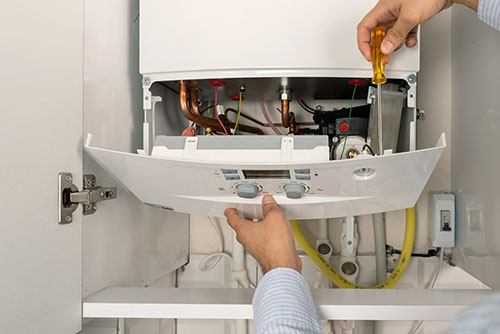
At Fremont Plumbing and Air Pros, we provide expert boiler services including installation, repair, and maintenance for homes and businesses. Whether your boiler is not heating properly, making unusual noises, or needs a full replacement, our experienced technicians ensure safe, efficient, and long-lasting solutions to keep your property warm and comfortable.
Boiler Repair and Installation in Fremont, California
We are Fremont Plumbing and Air Pros, and we are the trusted local boiler repair and installation experts in Fremont. Boilers are less common here than forced air furnaces, which means a lot of HVAC companies in this area do not work on them with any real depth. We do. Hydronic heat in older custom builds, combi boilers in renovated homes, and radiant systems in newer designs all share the same principle: heat moves through water, and water has to be moved, pressurized, and protected correctly for the system to run quietly and reliably for decades.
Boiler work calls for patience. The diagnostics take longer than a forced air call, the failure modes are different, and the safety considerations around combustion and pressure are real. Our techs are trained for it, and we treat boiler systems with the care they need. Whether your radiators have gone cold in an older Niles home, your combi unit is dropping pressure overnight in Mission San Jose, or you are planning a system replacement before next winter, we are your local HVAC pros you can count on for the job.
Our Boiler Repair and Installation in Fremont, California
Boiler service breaks into two main categories: keeping an existing system running well and replacing one that has reached the end of its useful life. Both require a different mindset than forced air work. Here is how we approach each side of the job in real Fremont homes.
Boiler Repair
A boiler that fails in the middle of a Fremont cold snap leaves the house without heat in a way that feels different from a furnace failure, because hydronic systems take longer to bring back up to temperature even after the repair is done. That makes responsive, accurate boiler repair work essential during the late fall through early spring stretch when our overnight lows can dip into the 30s and older homes hold the chill for hours. We repair gas fired and oil fired boilers, cast iron sectional units, modern condensing combi boilers, and the zone controls and circulator pumps that make the whole system work.
Common Problems We Fix
- Boiler that fires but never reaches set temperature on cold mornings
- Cold radiators on one floor while another floor heats fine
- Pressure relief valve discharging water onto the floor
- Pressure dropping overnight forcing constant refills
- Circulator pumps that have seized or grown noisy
- Expansion tanks that are waterlogged or have failed completely
- Air trapped in the system causing gurgling and reduced heat
- Old cast iron units leaking around section joints
- Combi boilers struggling to deliver both heat and hot water at once
Our diagnostic process starts with reading the system as a whole instead of jumping to a single component. We check operating pressure at the gauge, verify the expansion tank charge against the cold fill pressure, test the circulator pumps for flow and electrical draw, run the zone valves through their full cycle, and inspect the heat exchanger and burner combustion with a real analyzer. Many boiler problems trace back to air in the loops, pressure that has drifted off spec, or expansion tank failures that mask as bigger issues. Catching those early often resolves the symptom without major component replacement. When real repairs are needed, we work cleanly, label what we change, and test the system through several cycles before we sign off.
Boiler Installation
Boiler installation is a multi day project in most cases and a decision that shapes how a Fremont home is heated for the next 20 to 30 years. The choices made on install day around sizing, piping layout, controls, and venting determine how the system performs through every winter that follows. We install replacement boilers for older systems that have reached the end of their life, and we install new boilers for additions and remodels where hydronic heat is the right fit.
Common Reasons Homeowners Choose Installation
- Existing boiler is past 25 years old and parts are getting harder to source
- Cast iron sections have started leaking and the unit is no longer practical to repair
- Combi boiler is undersized and cannot keep up with heat plus hot water demand
- Repair costs on the old unit have crossed into replacement territory
- Upgrading from a standard efficiency unit to a high efficiency condensing boiler
- Home addition or remodel changed the heat load on the system
- Switching from oil to gas during a system replacement
- Adding zones or in floor radiant runs that require a more capable unit
- Old controls have failed and a modern unit handles everything better
Our installation process begins with a real heat loss calculation on the house. That number drives the boiler capacity, not what was installed thirty years ago by an outdated rule of thumb. A wildly oversized boiler short cycles, wastes fuel, and wears out the heat exchanger early. A properly sized unit runs longer cycles at lower output and lasts decades. On install day we pump down the old system, remove it cleanly, set the new boiler on a level pad with proper clearances, redo the near boiler piping to manufacturer specification, install or replace the expansion tank and pressure relief valve, run new venting to code for condensing units, wire the controls cleanly, fill and purge the system to remove all the trapped air, and run multiple test cycles to verify performance before we close out the job. The end result is a quiet, efficient, evenly heating system.
Reach out to us for assistance.
Why Fremont Homeowners Choose Fremont Plumbing and Air Pros
Boiler work rewards experience in a way most other HVAC service does not. Here is why Fremont homeowners with hydronic systems keep coming back to our team.
Real Boiler Expertise, Not a Furnace Tech in Disguise
Most HVAC companies in this area work on boilers occasionally and forced air constantly. The result is a tech who knows how to swap a thermocouple but cannot diagnose why a hydronic loop will not circulate evenly. Our techs are trained on boiler systems specifically, including near boiler piping conventions, primary secondary loops, modulating condensing controls, and the older cast iron behaviors that show up in long established homes. That expertise shows up the first time you walk through a problem with us.
Diagnostics That Take the Whole System Into Account
Boilers fail in ways that look like one problem but trace back to another. A radiator that will not heat can be air trapped at a high point, a stuck zone valve, a failed circulator, or a piping issue from a previous repair. We do not start swapping parts based on the obvious symptom. A Niles homeowner called us last winter with a cold second floor. The previous company had recommended replacing the boiler. We found a failed circulator on the upstairs zone and a waterlogged expansion tank. Two parts later, both floors heated evenly and the boiler had years left in it. That kind of diagnosis is what saves homeowners from replacing equipment that is still good.
Clean Installs With Proper Near Boiler Piping
An installed boiler is only as good as the piping connected to it. Wrong sized piping, missing primary secondary loops on units that need them, omitted air separators, and undersized expansion tanks all cause systems to underperform regardless of the boiler quality. We install to manufacturer specification and beyond where the situation calls for it. The piping looks clean because it is clean, and the system performs because the design behind it is right.
Honest Conversations About Repair Versus Replace
A 30 year old cast iron boiler that has started weeping at a section is usually past saving. A 12 year old combi with a failed zone valve almost always gets repaired. We tell you honestly where your system sits on that scale. A Mission San Jose homeowner came to us expecting a replacement conversation last fall and walked away with a repair plan because the boiler itself was healthy and the failures were all peripheral. Another homeowner in Centerville got the opposite answer because her system had reached the point where every component was aging together. Same honest approach, different right answer for each situation.
Care for Older Fremont Homes
Boilers tend to live in older homes around here, and older homes have quirks. Tight mechanical closets, original galvanized supply lines feeding the system, radiators with custom valves no longer in production, and pipe routing that follows logic from decades ago all come up regularly. We work patiently with what is there, preserve what still functions well, and update what genuinely needs updating. That respect for the building shapes every project.
Our Service Process
Step One: Real Phone Conversation
When you call, we ask the right questions to understand what the boiler is doing or not doing, what the recent history of the system looks like, and whether anything is urgent. That conversation routes the right tech with the right parts and gives you a real arrival window.
Step Two: Full System Diagnostic or Assessment
For repairs, the tech runs a real diagnostic that looks at pressure, expansion tank charge, circulator operation, zone valves, controls, combustion, and overall system flow. For installs, we walk the house, run a heat loss calculation, inspect the existing emitter capacity, and design the right system around what the home actually needs.
Step Three: Clear Options and Your Approval
Once we understand the situation, we explain it in plain language and lay out the options. Repair details where that is the right path, install configurations where replacement makes more sense, and the realistic timelines for each. Nothing happens before you give the go ahead.
Step Four: Careful Work and a Real Walkthrough
We do the work, run the system through multiple cycles to confirm everything is operating correctly, clean the work area, and walk you through what was done. You know what the system should sound and feel like, where the controls are, and what the annual service interval is going forward.
Service Area in and Around Fremont, California
Our boiler service covers every neighborhood in Fremont and reaches into the nearby East Bay cities where our customers live and own property. Whether you are in an older home in Niles with original radiators, a hillside build in Mission San Jose with a custom hydronic design, a remodeled Centerville home that switched to a combi boiler, a Warm Springs newer construction, or an Ardenwood property with radiant floor heat, you are inside our coverage area.
- Fremont, including Mission San Jose, Niles, Centerville, Irvington, Warm Springs, Ardenwood, Brookvale, Cherry-Guardino, Glenmoor, Sundale, and Parkmont
- Newark
- Union City
- Milpitas
- Hayward
- Sunol
- San Lorenzo
If you are nearby and not sure whether you fall inside our boiler service area, call us. We will tell you straight.
Professional Boiler Repair and Installation vs DIY Attempts
Some boiler maintenance is reasonable for a hands on homeowner. Reading the pressure gauge once in a while, watching for staining around the relief valve, listening for unusual gurgling in the lines, and noting whether radiators heat evenly are all things that build awareness without requiring tools. A homeowner can also bleed individual radiators with a key if the system has manual bleeders and the procedure is understood. None of that needs a service call.
Real boiler repair and installation work is a different conversation, and the reasons stack up quickly. Combustion safety is the first hard line. A gas boiler that is firing without proper combustion analysis can be putting carbon monoxide into the venting or back into the mechanical room. Carbon monoxide is invisible, odorless, and deadly, and the only way to confirm safe combustion is with a real analyzer in the hands of someone trained to read it. If you smell gas or suspect a gas leak, go outside immediately and call 911 – this is a serious emergency that needs urgent attention from the gas company.
System pressure is the second line. A boiler operates between specific pressure ranges, and the expansion tank protects the system as water heats and expands. A homeowner who keeps refilling a leaking system without addressing the underlying cause can mask a serious problem until something fails badly. Over pressurization can damage the heat exchanger, the circulator, and the controls. Under pressurization causes air to accumulate and circulation to fail.
Near boiler piping is the third. The piping immediately around a boiler is designed to specific dimensions and configurations for good reason. Wrong fittings, wrong sizes, missing components like air separators, or skipped primary secondary loops on systems that need them all cause performance problems that look like the boiler is failing. A real installer follows the manufacturer drawings and knows when to deviate based on the specific home.
The honest line is that boiler work is one of the areas where DIY almost always costs more than it saves. Maintain awareness of how your system is running and call us when anything seems off. Catching a problem early on a boiler is one of the surest ways to extend its life.
Plumbing, Heating & Air Conditioning Services
Complete Home Comfort Solutions for Your Entire Property
From plumbing systems and water lines to heating and air conditioning units, we have the tools and expertise to handle any challenge your home or business may face. Our team delivers reliable, high-quality service to keep everything running smoothly year-round.
We Deliver Expert Results
Don’t settle for temporary fixes. We combine years of hands-on experience with modern technology to deliver long-lasting plumbing, heating, and cooling solutions. Our team values your time, your comfort, and your property.
- Plumbing Repairs & Installations
- Heating System Repair & Maintenance
- Air Conditioning Services
- Leak Detection & Pipe Repair
- Drain Cleaning & Unclogging
- HVAC Diagnostics & Tune-Ups
Frequently Asked Questions
How long should a boiler last in Fremont?
Cast iron sectional boilers can run 30 years or more when properly maintained. Modern condensing combi boilers typically run 15 to 20. The biggest variables are annual service, water quality in the system, and whether the original install was done correctly. A boiler that has been ignored for a decade often shows up as a much bigger project than one that has been touched once a year.
Why are some of my radiators cold while others heat fine?
Air trapped in the system is the most common cause. Hydronic loops need to be bled at the high points so air pockets do not block circulation. Other causes include a failed zone valve, a seized circulator pump for that loop, a balancing issue from a previous repair, or a closed isolation valve someone forgot about. We trace the loop, find the cause, and address it directly.
How fast can you get to my Fremont home for boiler service?
Same day for most situations, faster for true emergencies like no heat overnight in cold weather. When you call, the dispatcher gives you a real arrival window. We hold our times.
How long does a new boiler installation take?
A standard replacement in a Fremont home typically takes one to two full days, depending on the complexity of the near boiler piping and any controls upgrades. A new system going into a home that has not had hydronic heat before takes longer. We give you the realistic timeline at the assessment.
What size boiler does my home need?
That depends on the heat loss of the house, not on what was installed before. Many older boilers were significantly oversized by rule of thumb decades ago, and right sizing the replacement often means a smaller unit that runs more efficiently. We do a real calculation rather than matching the old equipment.
Is there a boiler service company near me that handles cast iron systems?
We do. Older cast iron sectional boilers, including the early modular designs and the long established American brands, are something our techs work on regularly. We know how to diagnose section leaks, judge when a unit is worth keeping, and source the right replacement when it is time.
What is a combi boiler and is it right for my home?
A combi boiler provides both space heating and domestic hot water from one unit, replacing both a boiler and a separate water heater. They work well in homes where space is tight and hot water demand is moderate. They struggle in larger households with multiple bathrooms running at once. We help you decide whether your situation fits.
Why does my boiler keep losing pressure?
Pressure loss in a closed hydronic system means water is escaping somewhere. Possible sources include a leaking pressure relief valve, a slow leak at a joint or radiator, a failing expansion tank causing the relief valve to open intermittently, or air being released through automatic vents at a faster rate than normal. We find the source rather than just refilling the system.
Do you handle radiant floor heating?
Yes. Hydronic radiant floor systems run from a boiler the same way radiators do, just through tubing in the floor instead of cast iron emitters. We work on existing radiant systems and integrate new radiant runs into boiler replacements where the design supports it.
How often should I service my boiler?
Once a year, ideally in early fall before the first cold stretch. A real annual service includes combustion analysis, pressure verification, expansion tank check, circulator inspection, control testing, and a visual inspection of the heat exchanger and venting. Annual service catches small problems before they become winter breakdowns.
Will a high efficiency boiler actually save me money?
If your old unit was significantly less efficient, yes. A jump from an 80 percent efficient boiler to a 95 percent condensing unit reduces gas use noticeably over a winter. The savings depend on how much you run heat and how the new system is configured. We walk through realistic numbers for your specific situation.
What should I do if my boiler is making unusual sounds?
Banging or kettling sounds usually point to scale buildup inside the heat exchanger or trapped air in the system. Gurgling at the radiators or near the air separator points to air that needs to be purged. None of these sounds are normal in a healthy system, and ignoring them can shorten the life of the equipment. Call us and we will diagnose what is happening before it gets worse.
Reliable Hydronic Heat for Your Fremont Home
A well maintained boiler can keep a Fremont home comfortable for decades. A neglected one slowly turns into a more expensive problem every year until it finally fails on a cold night. The keys are honest diagnostics on repairs, right sized equipment on installs, careful near boiler piping, and a local team that understands hydronic systems specifically rather than treating them as a side line to forced air work.
Whether your radiators have gone cold, your combi unit is dropping pressure, your old cast iron is finally showing its age, or you are planning a system replacement before the next winter arrives, we are the team that handles boiler work in this city with the patience and expertise it deserves.
Zip codes we serve: 94536, 94537, 94538, 94539, 94555, 94560, 94587, 94544, 94545, 94546, 94541, 94542, 94543, 94557, 94586, 94035, 94038, 94039, 95035, 95036